
Print, PDF or web annual report: how to choose
Your annual report needs to be approved, published and used. A downloadable document may satisfy one reader; another needs a quick route to a particular result on their phone. A board meeting, an investor enquiry and a community presentation each create a different reading situation.
Choose the format around those situations before design begins. That will help you scope the right outputs, avoid duplicating work and give the report a useful life beyond publication day.
Start with the reading task
List the people who need the report and the questions they bring. A financial reader may need a complete, stable document with detailed tables. A prospective partner may want to understand your priorities and evidence quickly. Staff may need a few reliable pages they can share in a conversation.
Also establish any filing, governance or contractual requirements with the people responsible for them. Those requirements form the starting specification. The communications team can then decide how to help wider audiences engage with the approved information.
You may need a combination of formats. Give each one a clear purpose and decide which version is authoritative if a correction is required.
Compare the practical options
Print: a defined physical use
Print can suit a meeting, event or audience that values a physical publication. It offers a controlled reading experience and can give photography, diagrams and longer stories room to work.
Agree quantities and distribution before production. Ask who will receive a copy, how it will reach them and what evidence from previous years supports the quantity. Material choices, finishing, transport and the risk of unused stock all belong in that conversation. A short summary may serve the physical occasion while the full report remains available elsewhere.
PDF: a complete, portable reference
A PDF gives readers a document they can download, retain and circulate. It can also preserve a clear annual record. Navigation, file size and legibility need attention, particularly when the source design contains wide spreads or dense financial tables.
Accessibility needs a defined production and testing process.
W3C guidance explains the importance of logical reading and tab order in tagged PDFs. A visually tidy export alone does not establish that a document works for people using assistive technology. Agree the required checks and the person responsible for completing them.
Web: routes into the information
A web report can give different readers direct routes to a section, theme or result. It also allows layouts to adapt to screen size and creates opportunities to connect the report with relevant services, projects and supporting detail.
That flexibility brings ongoing responsibilities. Someone needs to own the content, keep links working and control corrections. Agree whether the report will sit within your main website or require a separate build, who will maintain it and what happens when the next reporting year arrives.
A flipbook provides a page-turning presentation of a document. Evaluate it separately from a report designed as web pages: check how a real reader navigates it, reads it on a phone and accesses the information in another way.
A format worksheet you can use now
For each proposed output, complete these five lines. Compare the answers before approving the mix.
- Reader and situation: Name a specific audience and where they will use the report.
- Essential task: Identify the information they must find and the action or judgement it supports.
- Format benefit: Explain what print, PDF or web makes easier for that particular task.
- Delivery responsibility: Name the owner for approvals, accessibility checks, publication, corrections and maintenance.
- Evidence of usefulness: Decide what you can learn from distribution, reader feedback, task testing or digital interactions.
Here is an illustrative outcome. A charity chooses a complete PDF for trustees and funders, a small printed summary for a supporter event, and a set of web pages explaining its main areas of work. Each format has a different audience job. The team agrees the report data once, then adapts its presentation to suit each use.
If you cannot name the job of an output, challenge whether it belongs in the scope. That keeps the production effort focused and helps the team maintain what it publishes.
Design for a repeatable reporting cycle
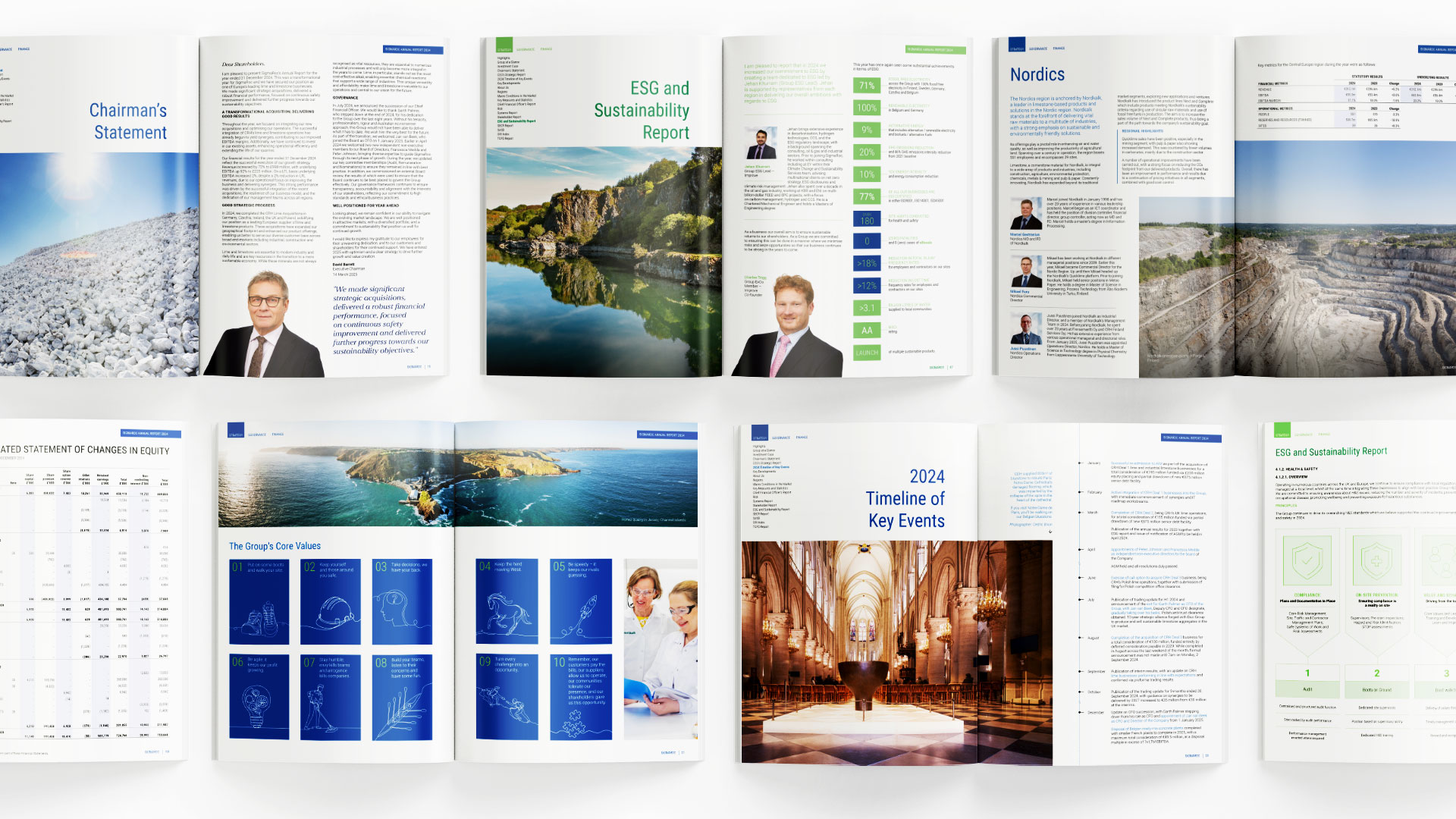
Our SigmaRoc Annual Report 2025 work brought extensive business, financial and ESG content into a coherent publication, with versions prepared for print and digital use. The project involved visual information such as charts and infographics alongside detailed typesetting. It shows why the output mix and the underlying design system need to work together.
After launch, review what each output helped people do. A download records access to a file; it cannot tell you whether someone understood the information. Pair usage signals with a small number of reader conversations or task checks before deciding what to repeat next year.
Our annual and sustainability report design work considers the audience, the content and the production route together. Bring us your required outputs and your readers’ priorities, and we can help define a sensible format mix.
More articles