
How to brief an annual or sustainability report design project
A report can arrive at the design stage with a great deal of information and several important decisions still open. The narrative is evolving, data sits with different teams, and everyone is working towards the same publication date.
A clear report design brief gives that work a manageable shape. It helps you agree what readers need, what the design team will receive and how the document will move through approval. We recommend preparing it alongside the content plan, while there is still time to resolve gaps.
Define the people who will use the report
An annual or sustainability report may serve investors, employees, partners and people assessing your organisation for the first time. Identify the questions each group needs answered. Then agree which readers and decisions should guide the overall structure.
For example, a stakeholder checking progress against a commitment needs the reporting period, a clear measure and enough context to interpret it. A potential partner may first need to understand the organisation’s priorities and relevance. These different tasks influence summaries, navigation, charts and the amount of explanation required.
Write a short purpose statement: “This report will help [priority readers] understand [subject] so they can [decision or action].” Use it to assess proposed content and keep the document focused.
Agree the structure before developing detailed graphics
Create a working contents list and identify the main message of each section. Check that the opening gives readers enough context, that related evidence sits together and that repeated information has a clear reason to appear twice.
Next, identify the pages that need particular design attention. A complicated data story may benefit from a chart or diagram. A change in strategy may need a carefully structured feature. Flag these early so the designer can understand the information and discuss the right approach with its owner.

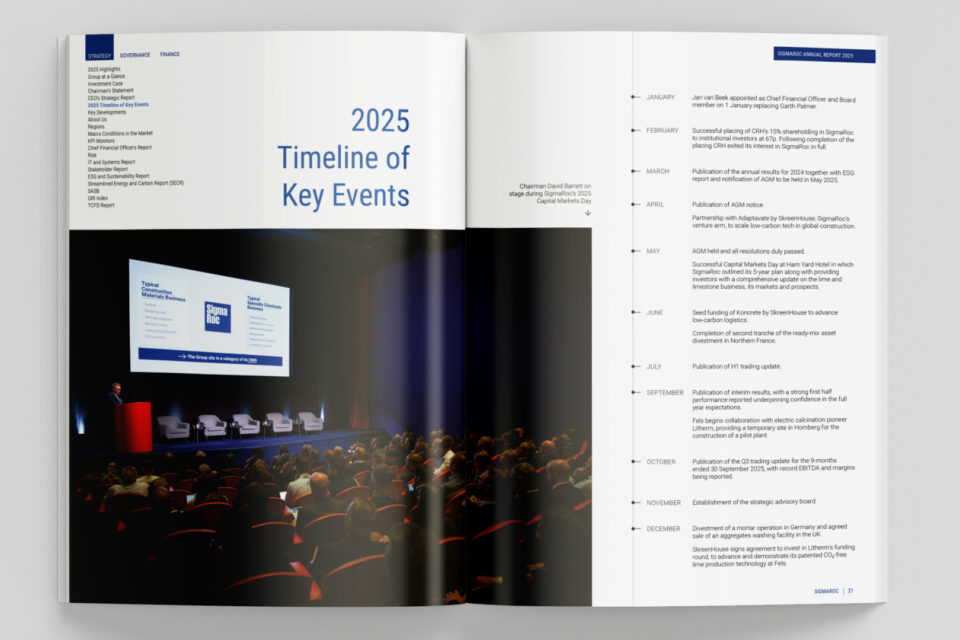
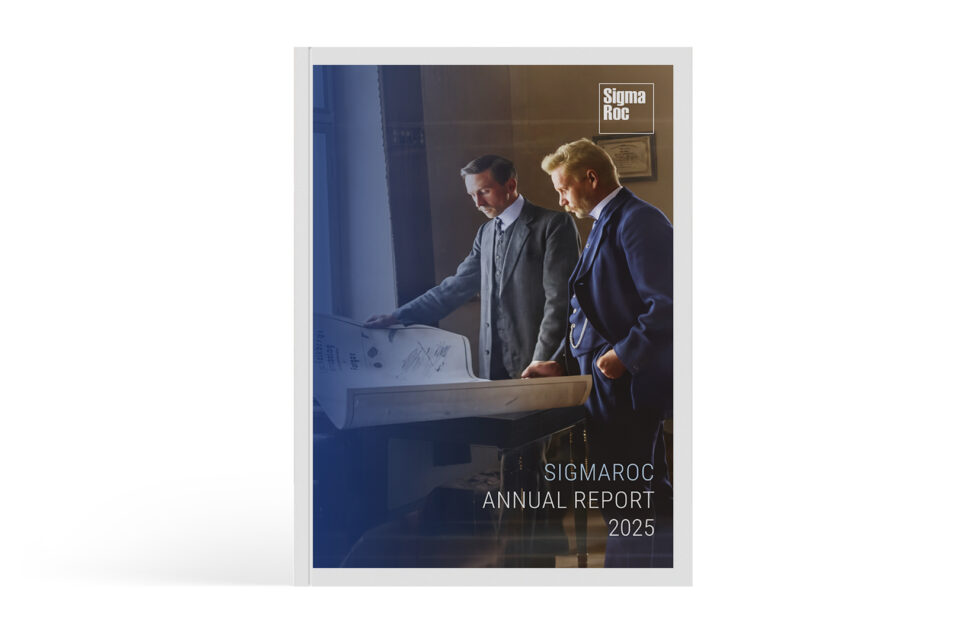
We worked on SigmaRoc’s 2025 annual report, a 235-page publication bringing together corporate information, features and financial content. The work included charts, infographics and detailed typesetting, with versions prepared for print and digital use. Our SigmaRoc annual report case study gives a useful view of the design demands within a substantial publication.
Interested in seeing more?
Give every important input an owner
A report brief should explain how content becomes ready for design. “Copy supplied by the client” leaves plenty of room for uncertainty. Specify the state of that copy, who checks it and how changes will be managed.
Use this responsibility checklist with your team:
- Narrative owner: confirms the section messages, supplies the agreed copy and resolves overlaps between contributors.
- Data owner: supplies the underlying figures with sources, units, dates and definitions, and checks that charts represent them accurately.
- Design lead: develops the visual hierarchy, layouts and agreed graphics, and raises questions about clarity or missing information.
- Specialist reviewer: checks the relevant financial, sustainability, legal or other specialist content within their remit.
- Final approver: resolves conflicting comments and confirms the agreed version is ready for publication.
One person may hold more than one role. What matters is that everyone knows where a decision belongs. Design can make evidence understandable; your reporting and specialist advisers retain responsibility for its accuracy and any assurance requirements.
Make the outputs specific
State how people will receive and use the report. If you need print, explain the intended audience, distribution and quantity assumptions. If you need a downloadable PDF or a digital publication, describe the reader tasks, navigation and accessibility requirements you expect the work to meet.
Ask your agency to scope these outputs explicitly, including any specialist testing or document preparation. A print-ready file, a screen version and an accessible publication can require different work. Agree the deliverables and acceptance checks before production.
This also creates a sensible point to consider waste. Confirm how printed copies will be used, and plan digital distribution around useful reader journeys. The appropriate format follows the audience and purpose.
Use a readiness review before production
For each report section, record the following in a shared list:
- Section and reader question: what should someone understand after reading it?
- Content state: draft, reviewed or approved, with the responsible person named.
- Evidence: data source, reporting period, units and any interpretation that needs specialist checking.
- Visual needs: required charts, images, diagrams or tables, including permissions and editable source files.
- Decision date: when the material is needed and who will resolve outstanding questions.
- Review this list together before setting the production schedule. It reveals dependencies more clearly than a single “all copy due” date and helps you see which sections can move forward.
Plan feedback as carefully as design
Agree how reviewers will comment, who will consolidate their feedback and where the current approved version lives. Separate corrections from new content or changes to the agreed direction. Your agency can then explain the effect on scope and schedule before making substantial changes.
You do not need every sentence finished before an initial conversation. Bring the purpose, proposed structure, publication commitments and an honest view of content readiness. Our annual, sustainability and impact report design work can help you turn that into a clear creative and production brief.
More articles