
Brand architecture for partnerships: how to align many organisations
When several organisations come together, the shared brand has a demanding job. It needs to explain the programme’s purpose, represent its partners fairly and remain clear to people outside the partnership.
That can become difficult when every conversation starts with logo size and placement. A useful brand architecture gives those design decisions a foundation. It defines how the programme, its activities and its partners relate to one another, so people can understand who is doing what.
Explain the programme before arranging the logos
Start with the audience. What do they need to understand about the partnership, and what action should follow? Someone assessing an environmental initiative may want to know its purpose, the organisations involved and where its work is taking place. An internal partner may need to explain their own contribution within that larger story.
Write a shared description of the programme in plain language. Agree which name leads, how partners are described and what the programme can claim collectively. Resolve differences in meaning before they become competing versions of the identity.
Our brand strategy and identity work connects these questions with the way a programme expresses itself. A clear relationship between purpose, audience and identity helps the design system make sense in use.
Choose a structure people can follow
A partnership might use a distinct programme identity, visibly endorsed by its members. It might lead with an established organisation’s brand and identify the programme within it. Or it may need a family of related identities for several activities. The appropriate choice depends on accountability, recognition and the audience’s needs.
Make that choice against real applications. Try the programme name on a website header, an event invitation and a partner’s presentation. Check who appears to be responsible and whether someone unfamiliar with the partnership can explain the relationship.
Also look ahead. A structure that works for the founding group should have an agreed way to accommodate new partners or activities. Define what can change without reopening the entire identity.
Use a partnership brand decision worksheet
Before asking for design options, work through these six decisions. Record the owner of each decision and the evidence or agreement behind it.
- Public purpose: What does the partnership exist to achieve, and which audience question must the identity answer first?
- Lead identity: Which programme or organisation name should people recognise and remember? Identify any existing recognition you need to preserve.
- Partner relationship: How will you describe members, funders, delivery partners and advisers? Use accurate roles so a visual association does not imply the wrong responsibility.
- Endorsement: Where do partner marks need to appear, and what practical rules govern their use? Record any funding or permission requirements that need checking.
- Activities: How will projects, regional work or events relate to the programme? Decide whether each needs a distinct identity or a clear description within the shared system.
- Approval: Who can approve the overall direction, who checks their organisation’s representation and who resolves a disagreement?
You can then brief the identity around agreed relationships. It gives partners something more useful to assess than personal preference about an isolated logo.
A shared identity for an environmental programme
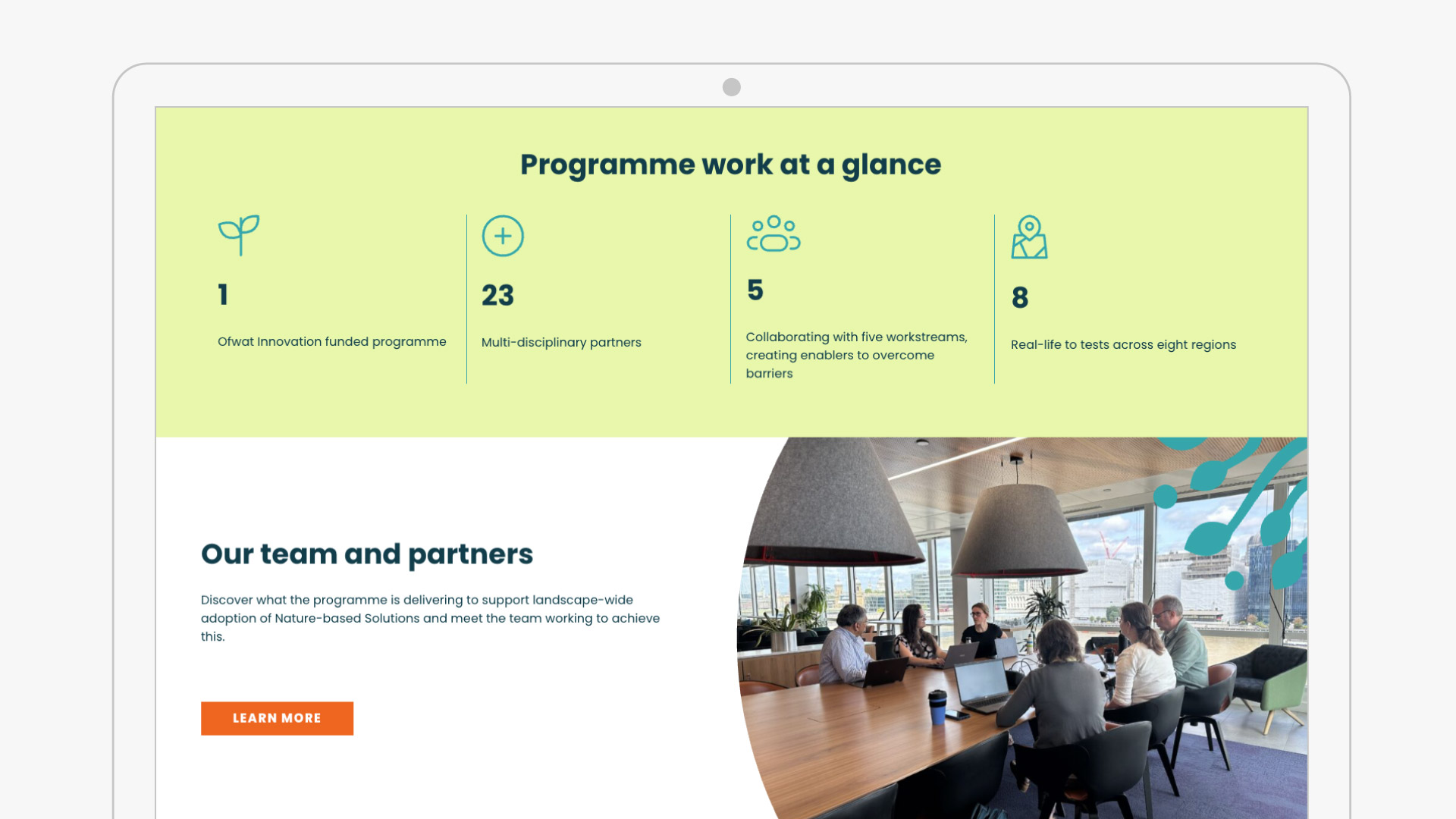
For The Rivers Trust’s Mainstreaming Nature-based Solutions programme, we developed branding, guidelines and a website for a partnership of 23 organisations. The work gave the programme a distinct visual identity and a shared digital presence alongside its partner organisations.
The website brought together information about the programme, regional tests and partners, with space for updates and case studies. Our MNbS brand and website case study illustrates the relationship between a programme identity, practical guidance and a place to communicate shared work.
The broader lesson is useful for other partnerships: the identity needs to work where people encounter the programme, and partners need a clear way to apply it. Governance decisions about authority, responsibilities and claims should be agreed with the organisations involved.
Test a realistic partner scenario
Consider an illustrative regional initiative involving a council, a university and several businesses. The programme needs a shared website, while each organisation wants to communicate its participation through its own channels.
The team could agree that the programme identity leads on shared materials. Partner organisations receive a consistent description of the initiative and an approved way to explain their role. A partner-led event uses that organisation’s identity, with the programme relationship identified clearly. Any new member follows the same agreed approach.
Test these scenarios before finalising the design. They reveal questions about ownership, wording and permission while the system is still straightforward to adjust. The objective is a relationship people can explain consistently.
Give the partnership a usable starting point
After agreeing the architecture, brief the core identity and its first applications together. Include the website, presentations or programme materials people will use immediately. Assign someone to maintain the shared assets and answer questions as the partnership develops.
If you are bringing several organisations together, arrive with the programme’s purpose, the partners’ roles and the communication challenges you face. We can help you define a shared identity that gives the collaboration a clear expression and a practical basis for its next stage.