
Place website design for people with very different reasons to visit
A resident checking an event, a business looking for space and a visitor planning an afternoon may arrive on the same website. They need different answers, often in a hurry. A useful place website helps each person recognise where to go without asking them to understand how your organisation is arranged.
For place marketing teams, councils, campuses and mixed-use destinations, that is the central design challenge. The site needs to express a coherent place while supporting several practical journeys. We recommend making those journeys visible before choosing a homepage layout or compiling a list of features.
Start with the reason for the visit
Audience labels are a helpful starting point, but they need another layer. What is this person trying to do, what do they already know, and what would a successful visit look like?
Someone moving into the area needs different information from someone who has lived there for years. A small business exploring a location needs a different route from an established occupier updating its directory listing. Treating both as “business users” hides decisions the website must support.
Bring search terms, current enquiries, content use and conversations with users into that discussion. They help distinguish tasks people actually need from features that have accumulated on an internal wish list. Where evidence is missing, record the assumption so it can be tested.
Give competing needs a fair way to be prioritised
Every stakeholder can make a reasonable case for prominence. The useful question is which journeys deserve priority at which point in the experience.
We would compare the frequency of a task, its importance to the person, the consequence of failure and its relevance to the place’s objectives. Finding essential access information may be less commercially visible than a property enquiry, yet it can be decisive for someone planning a visit.
Use this simple worksheet with the team. Complete one line for each important journey:
- Person and situation: who is visiting and what has prompted them?
- Task: what do they need to find, decide or complete?
- Evidence: what tells us this matters?
- Route: where should the journey begin and what is the next step?
- Owner: who keeps the information accurate?
- Success: how will we know the route works?
Use participation to clarify the brief
Workshops give people a way to explain their priorities and challenge assumptions together. They work best when there is a clear question to resolve and a visible route from the discussion to a decision.
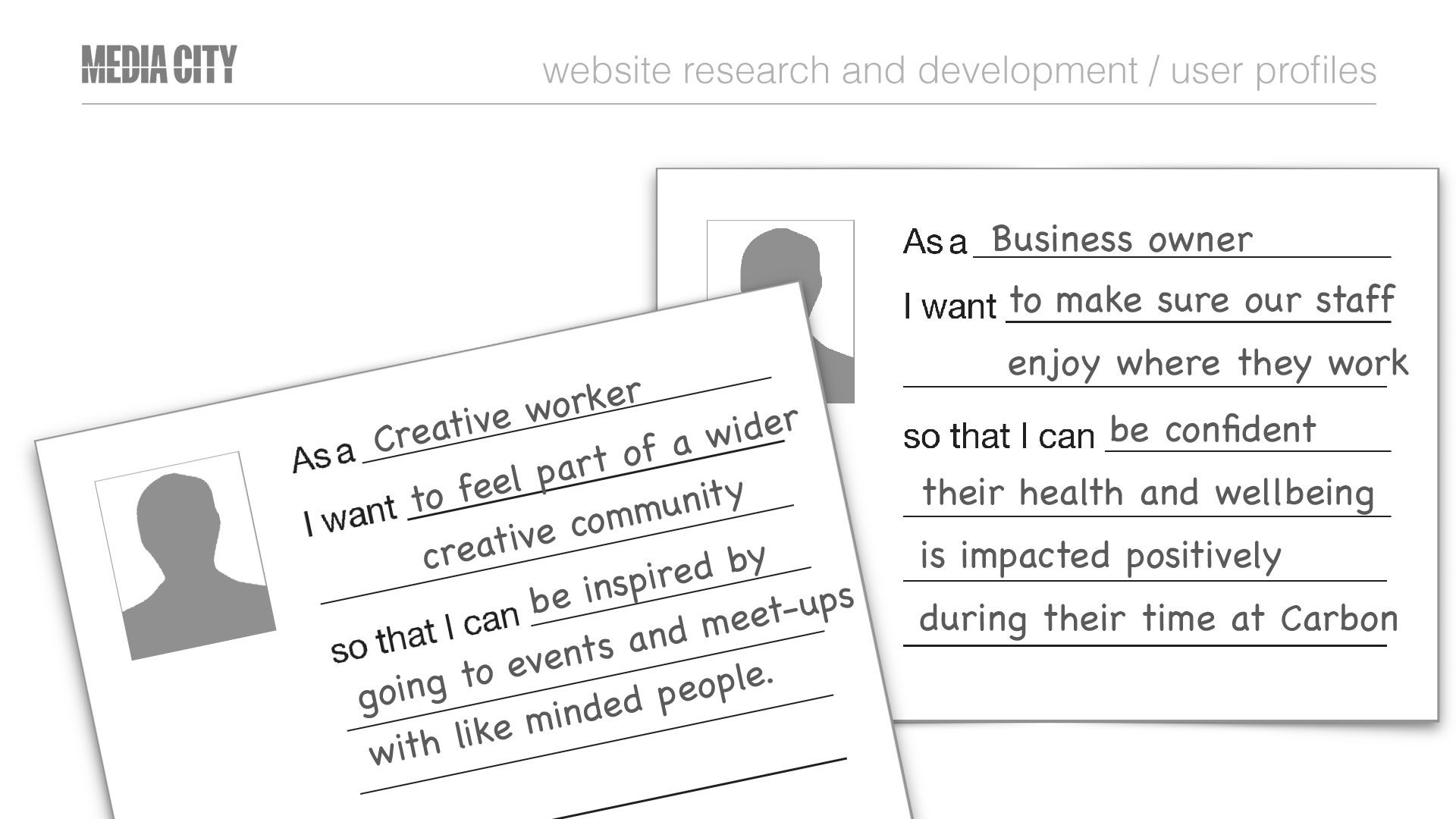
In our MediaCity website work, co-design workshops brought residents, businesses and other stakeholders into discovery. The resulting site included events, a business directory and room booking. The example shows how varied audience needs can shape a connected digital experience
Participation also needs boundaries. Explain who advises, who makes the final decision and how unresolved differences will be handled. A workshop should inform the brief; it should not leave the project waiting for every participant to approve every page.
Design content and functionality together
An events calendar needs an owner, useful event details and a reliable way to remove expired listings. A directory needs consistent records. A booking journey needs a clear handover between the website and whoever manages the booking.
These are content and service decisions as much as technical ones. Agree them before a feature becomes a fixed promise in the brief. A smaller set of well-maintained functions can serve the place better than an ambitious collection that the team cannot sustain.
Make the essential information easy to reach on mobile, and account for people using assistive technology or slower connections. Select images and motion for a clear purpose. The richness of the place should help people understand it without creating unnecessary obstacles to a simple task.
Plan for the place to change
People move in, businesses change, venues open and events finish. The website needs an editorial routine that reflects that movement. Name the people who can update each content type, who approves sensitive information and when older material is reviewed.
After launch, review the important journeys rather than looking only at total traffic. Are people finding event details, reaching relevant businesses or completing the intended enquiry? Combine those observations with feedback from the people maintaining the site.
We bring audience understanding, creative thinking and digital design together to help places make those decisions. If your next website has several audiences to serve, let’s explore the priorities and shape a brief around them.