
Charity website redesign: prioritise the journeys that matter
Your charity website has several important jobs. Someone needs help today. Someone else wants to give. A partner is checking what you do, while a colleague needs to update a service page between other responsibilities.
A redesign gives you a chance to make those journeys clearer. The difficult part is deciding what gets attention first, especially when every department has a reasonable request and the team has limited time to deliver the content.
We recommend prioritising the tasks people need to complete, with particular care for the consequences when they cannot. That creates a more useful starting point than a list of pages each department would like.
Name the task behind each audience
An audience label is only the beginning. A supporter might want to donate, check how funds are used or change an existing arrangement. A service user might need to understand eligibility before feeling comfortable making contact.
Describe each journey in a short sentence: a person in a particular situation needs to do something for a reason. Then identify what they need to know, what might make the task difficult and what should happen next.
Bring together what you already know from enquiries, search terms, website behaviour and staff experience. Check the assumptions with people who use the service. Low traffic to a page does not establish low need; people may be struggling to find it in the first place.
Use a journey prioritisation grid
Create a row for each important task and complete the six fields below. The aim is to have a useful conversation about consequence and effort, without turning the exercise into a large scoring project.
- Person and task: Who needs to do what, and in which circumstances
- Consequence of failure: Could a failure prevent access to help, undermine trust or interrupt an important relationship?
- Current barrier: What evidence shows where people hesitate, abandon the task or need staff assistance?
- Minimum useful journey: What information and next step would allow the person to proceed with confidence?
- Delivery dependency: Which content, system, approval or colleague is needed to make that journey work?
- Owner and check: Who keeps it accurate, and how will you test that someone can complete it?
An illustrative service-access row might identify a parent who needs to find suitable activities, understand who can attend and ask about joining. The minimum useful journey includes current activity information, clear eligibility and a reliable contact route. Its dependencies include a named programme owner and an agreed response process.
A separate donation row needs its own decisions about the explanation of the cause, the payment journey and confirmation. Keeping these rows distinct helps you see where the website needs different information, reassurance and technical support.
Treat content ownership as part of the design
Every important page needs someone who can confirm its accuracy. Establish which details change frequently, who approves them and how editors will make the update.
Ask staff to demonstrate everyday tasks during planning: adding an event, changing an activity time or replacing a document. Those tasks can reveal requirements that a visual homepage discussion misses. A content system should fit the people who will actually use it.
For sensitive services, agree how contact information and response expectations will be presented. Make the next step clear and use only channels the organisation can maintain reliably. Review any journey that collects personal information with the people responsible for service delivery, privacy and safeguarding.
Give a varied organisation clear routes
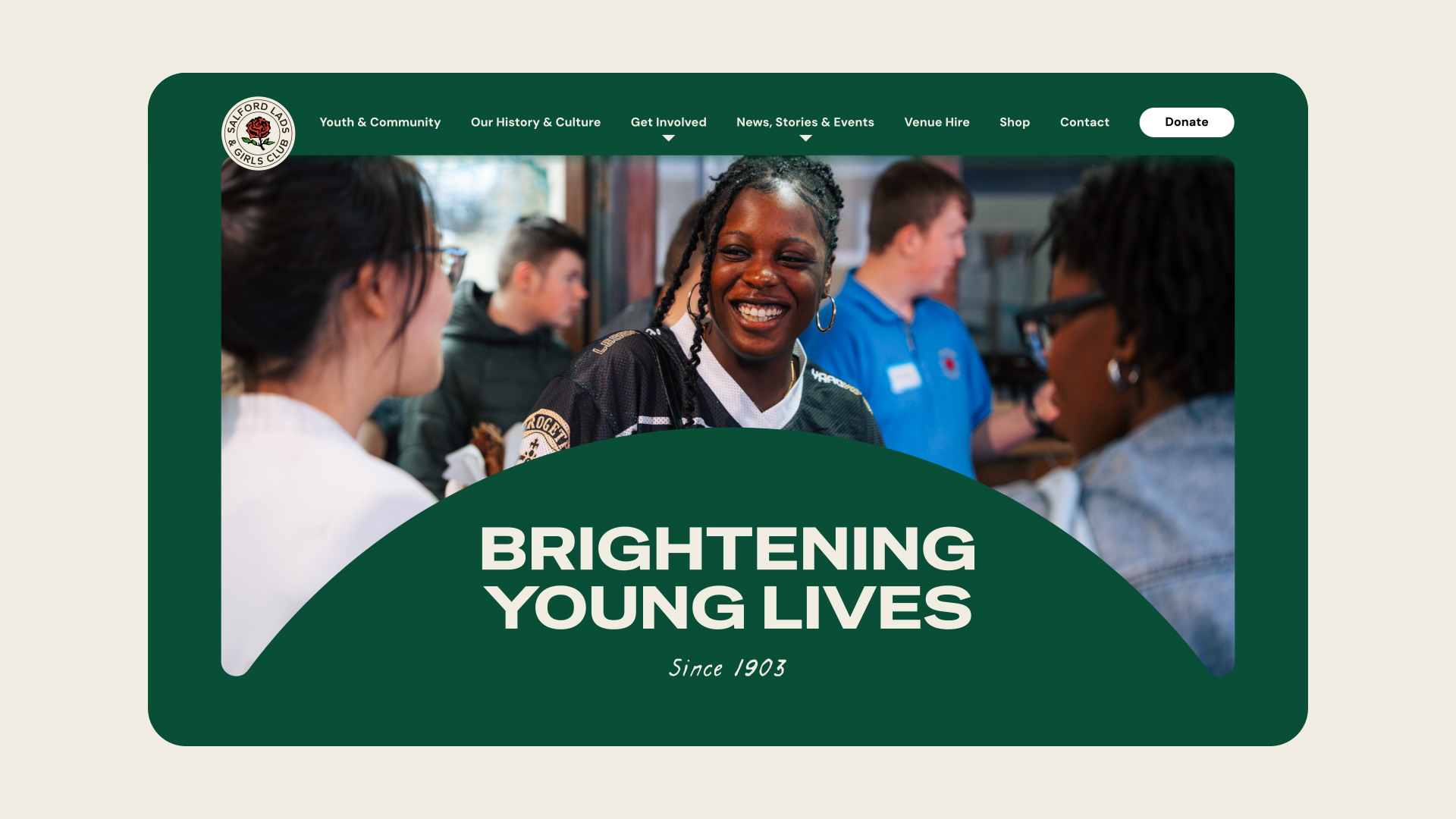
Our Salford Lads & Girls Club brand and website project needed to bring several aspects of one organisation together. Youth and community work, heritage and culture, partnerships, support and venue hire all needed distinct routes through the site.
That is a useful example of a charity whose audiences share an organisation while arriving with very different intentions. A parent exploring activities and a visitor planning a heritage trip need recognisable, relevant ways into the information. The structure has to carry that difference alongside the organisation’s wider story.
Make the first release manageable
Once you have mapped the journeys, agree what must work for launch and what can follow. Keep essential access, accurate information and reliable contact routes within the first release. Give later improvements an owner and a decision point so they remain visible.
Integrations deserve early attention. Identify which system holds the authoritative information, what the website needs to exchange with it and who will support the connection. Confirm feasibility before making the integration central to the launch promise.
Reserve time to test representative journeys with users, including people who encounter access barriers. Ask them to find information and complete a task. Their experience will help you assess the navigation, language and interactions together.
If a redesign is on your agenda, start by bringing your three most important journeys and the evidence of where they struggle. Our website design and development work can help turn those priorities into a clear, maintainable scope that supports the people your charity serves.