
Brand guidelines for growing teams: how to keep partners and suppliers consistent
A supplier asks which logo to use. A colleague finds three presentation templates. A partner creates a social graphic using an old colour palette. Each task seems small, but together they reveal a practical problem: people cannot reliably find or apply the current brand.
Brand guidelines become especially useful as more people represent an organisation. Their job is to help those people make sound decisions with the time, tools and knowledge they have. A well-designed document needs a workable system around it.
Build around the jobs people actually do
Ask staff, partners and regular suppliers what they produce most often and where they hesitate. You might hear about event slides, funding announcements, recruitment adverts, a service leaflet or an email to customers. Use those jobs to decide which examples and templates the guidance needs.
Explain the reason behind important choices. If a particular logo version is needed on a dark background, show it in context. If a programme name must appear with a partner endorsement, show the relationship at a realistic size. Someone applying the rule should be able to understand the intended result.
Make fixed and flexible choices clear
People need to know which elements carry the identity and where they can adapt it. That might mean fixed logo relationships alongside flexible image choices, or a shared headline style with different formats for different audiences. Describe the boundary and include an example of an acceptable variation.
A useful template handles a recurring task while leaving room for its actual content. Test it with a long title, an awkward image and a message that needs more explanation. These are the conditions in which people often create their own workaround.
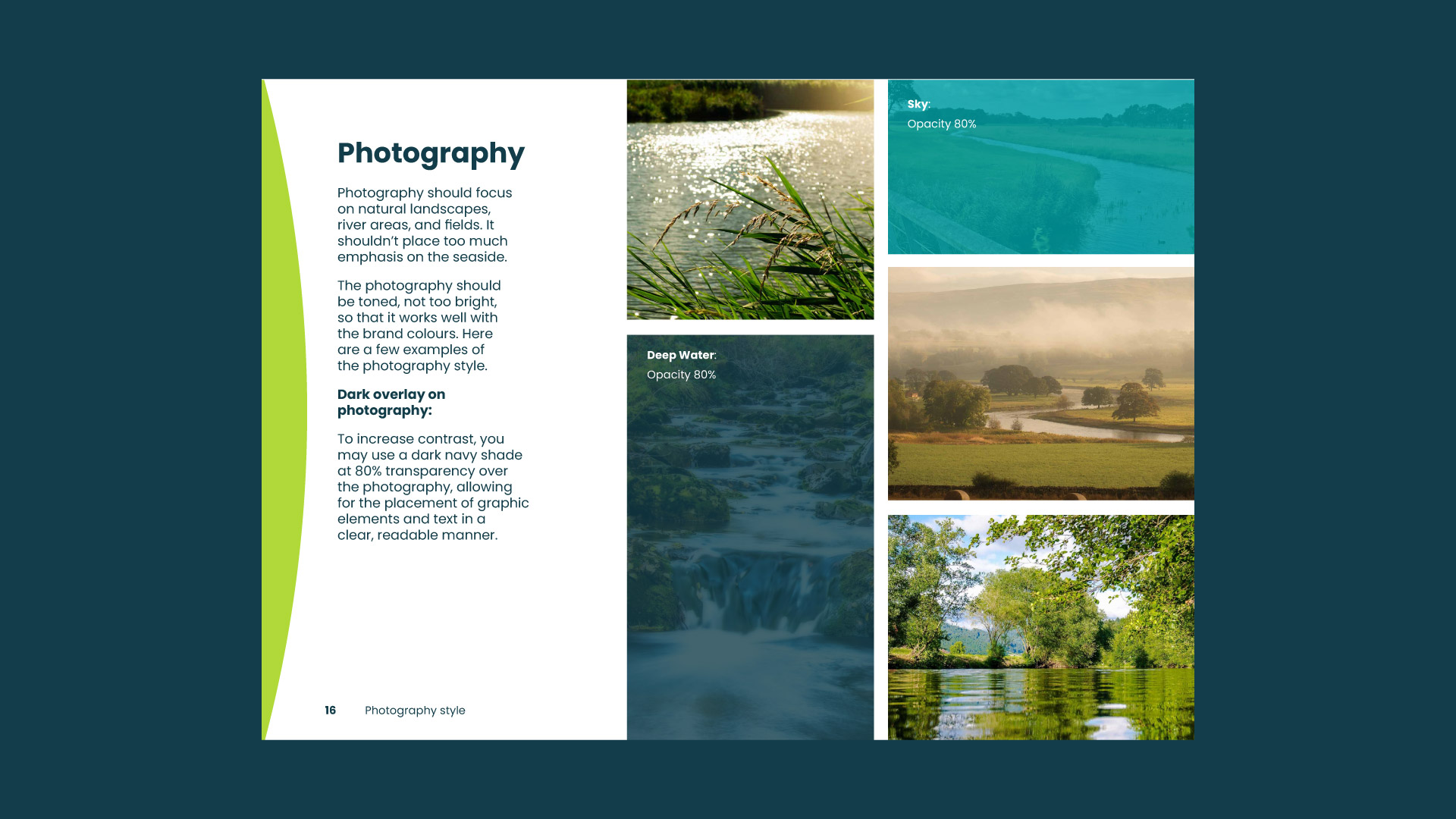
Our work for The Rivers Trust’s Mainstreaming Nature-based Solutions programme included identity, detailed guidelines and a website for a programme involving 23 partners. It shows why a shared identity needs practical guidance as well as distinctive design: many organisations have to represent the same programme.
Give the guidance an owner and a reliable home
Choose one place where people can find the current guidance, approved assets and templates. Label versions and dates clearly. Explain which files have been superseded, and update links in the places people already use. A new folder alone will not stop an old attachment circulating.
Name an owner who can maintain the material and route questions. That person need not personally approve every routine item. Agree which work can proceed using approved templates, which changes need design advice and which claims need a subject specialist or authorised reviewer.
Keep the route for questions short. A clear contact and an explanation of when to ask are easier to use than a general instruction to ensure brand compliance.
Use this guidelines adoption check
Try these checks with a colleague who was not involved in creating the identity. Use real tasks and observe where they need help.
- Find: can they locate the current guide, logo files and relevant template without asking the design team? Record the route they used and any confusing duplicates.
- Choose: can they identify the right asset for a specific background, format or partner relationship? Ask them to explain the choice.
- Make: can they complete a routine item using a realistic amount of content, such as an event slide with a long title? Note where the template breaks.
- Check: can they recognise an outdated or unsuitable example and find the guidance that explains why?
- Escalate: do they know which question needs help, who to contact and what information to provide?
- Maintain: is someone responsible for correcting the issue, updating the shared file and letting affected users know?
Turn the observations into a short improvement list. Fix recurring obstacles in the guidance or template rather than asking everyone to remember an exception. Keep the examples that people find useful and replace the ones that need repeated explanation.
Introduce the system through use
A practical handover can walk through a familiar task, show where the assets live and let users try the template. Make space for suppliers’ questions about formats and production requirements. Their feedback may reveal an application the original guide did not cover.
Plan the transition thoughtfully. Review existing printed stock and reusable materials before replacing them, and agree where a phased update makes sense. Explain the change so people understand both the new standard and the route towards it.
Review the questions people keep asking
Recurring requests, unused templates and repeated corrections are useful signals. Review them with the owner after people have had a chance to use the system. The goal is guidance that remains accurate as the organisation changes, with fewer decisions left to guesswork.
We develop brand identities and the tools people need to use them. Bring us the tasks your team finds difficult, and we can explore where clearer guidance, better templates or a more coherent brand system would help.
